

Singapore is a city where space is a premium measured in square feet and where the majority of the resident population lives in Housing Development Board flats that range from compact two-room units to more generous five-room layouts. When fitness content creators from larger countries talk about setting up a home gym, they are often describing a spare bedroom, a converted garage, or a basement space that simply does not exist in the reality of most Singapore households. The honest conversation about home workouts versus gym memberships in Singapore has to start from this physical reality rather than from an idealised version of what home training could look like with unlimited space.
This is not an article that declares one option universally superior. It is an honest, detailed breakdown of what each option actually delivers in terms of cost, results, practicality, and long-term sustainability for someone living the typical Singapore life, so that you can make a genuinely informed decision rather than one based on marketing from either direction.
The Real Space Constraints of HDB Training
A standard four-room HDB flat in Singapore has a total floor area of between 90 and 105 square metres, and that space is divided among bedrooms, a living area, kitchen, bathrooms, and often a yard or utility area. After furniture, the usable open floor space in the living room, which is typically where home workouts happen, is often as little as 10 to 15 square metres. In a two or three-room flat, this shrinks further.
This matters because most effective exercise modalities require more space than people initially estimate. A yoga mat takes up approximately 1.8 by 0.6 metres. Performing a proper lunge requires at least 2.5 metres of clear length. A full burpee requires ceiling height of at least 2.5 metres, which many HDB flats meet but barely. Dynamic movements like jumping jacks, skipping, and lateral shuffles require more horizontal clearance than most furnished living rooms allow without moving furniture each time.
There is also the neighbour consideration, which is uniquely significant in high-density HDB living. Jumping movements, heavy foot strikes, and the vibration from dropped weights travel through concrete floors in ways that create genuine conflict with downstairs neighbours. This is not a theoretical concern. HDB noise complaints related to exercise are common enough that many residents self-limit their home workouts to low-impact movements to avoid disputes, which significantly narrows the range of effective exercise they can perform at home.
What Home Workouts in an HDB Can Realistically Deliver
Within these constraints, home training in an HDB flat can deliver real results in specific domains. Being honest about what those domains are is more useful than either dismissing home training entirely or overpromising what it can achieve.
Bodyweight Strength and Calisthenics
Push-up variations, dip variations using a sturdy chair, bodyweight squats, lunges, single-leg Romanian deadlifts, glute bridges, and core work can all be performed in a small space with no equipment and minimal noise impact. For a beginner or someone returning to exercise after a long break, this range of exercises is sufficient to build a meaningful foundation of strength over the first three to six months of consistent training.
The limitation appears as you progress. Bodyweight training becomes progressively more difficult to overload over time. Once you can perform 30 push-ups comfortably, the path to continued chest and tricep development requires either adding resistance, which brings you back to equipment needs and space constraints, or progressing to more complex variations like archer push-ups and pseudo planche push-ups, which have a steep learning curve and limited ceiling for muscle mass development compared to loaded pressing.
Flexibility and Mobility Work
Yoga, stretching, and mobility work are genuinely well-suited to HDB home training. A mat, a foam roller, and a resistance band address the space and noise constraints of flat living while delivering real benefits for joint health, posture correction, and movement quality. For someone whose primary fitness need is counteracting the postural damage of an office job, a consistent home mobility practice delivers excellent value.
HIIT and Cardio Limitations
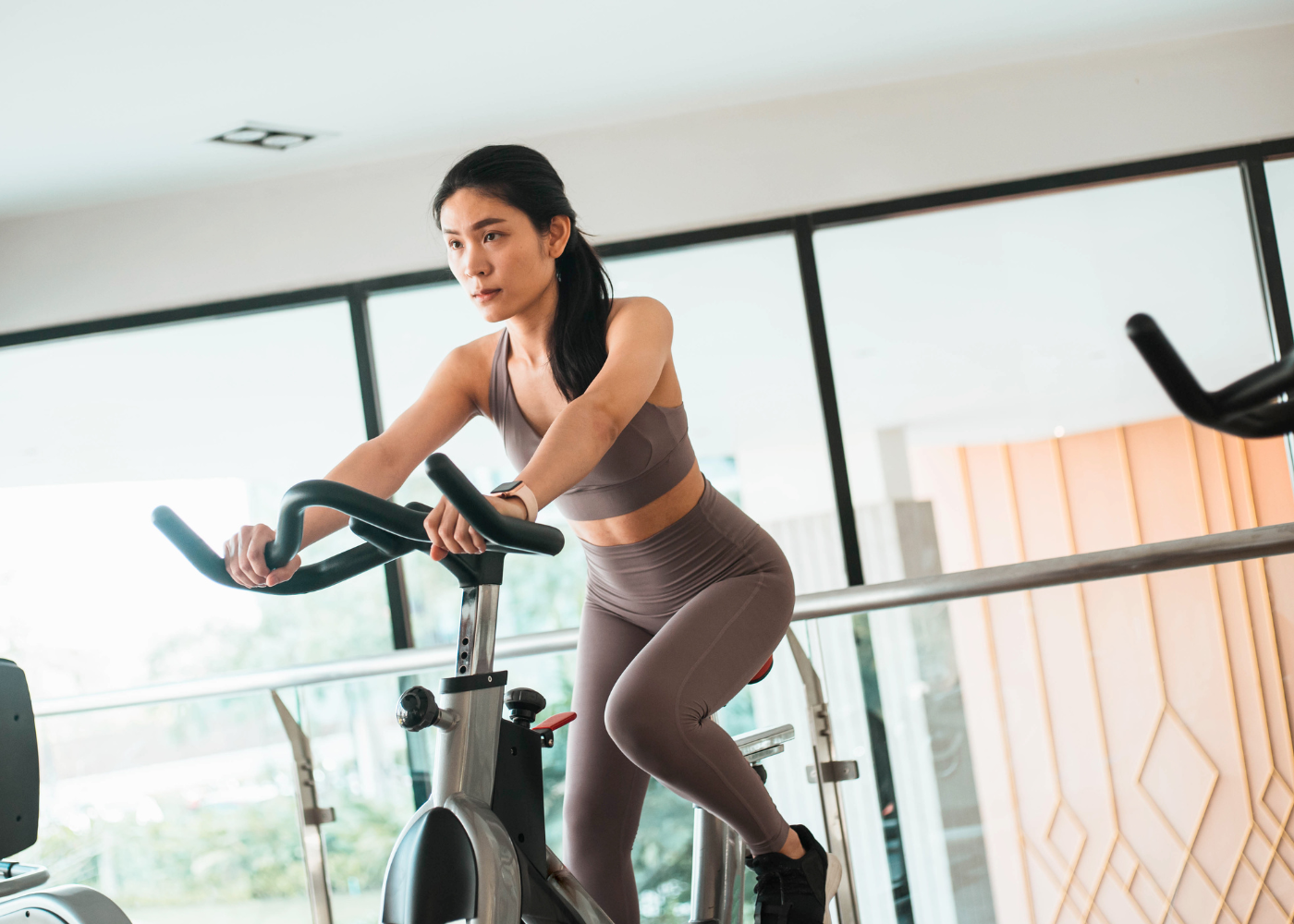
High-intensity interval training is frequently recommended for home workouts, but in an HDB context, the most effective HIIT modalities are the most problematic. Jumping exercises, box jumps, skipping, and high-knee running are all high-impact and generate significant vibration and noise. Low-impact alternatives like mountain climbers, bear crawls, and tempo bodyweight squats reduce the neighbour impact but also reduce the cardiovascular intensity that makes HIIT effective. Stationary bikes and rowing machines can address cardio needs at home without impact noise, but they occupy significant floor space and represent a substantial upfront cost.
The True Cost of Effective Home Training in Singapore
The home workout option is consistently marketed as the cheaper alternative to gym membership, and on a surface level the logic seems straightforward: no monthly fees, no commute, no waiting for equipment. But building a home training setup capable of delivering serious, progressive results over years requires equipment investment that most people underestimate when they first consider the option.
A basic resistance band set costs between 30 and 80 Singapore dollars and provides light resistance work but cannot substitute for loaded exercises in the medium to long term. A set of adjustable dumbbells adequate for meaningful strength training, covering a range from 5 to 30 kilograms, costs between 300 and 600 dollars depending on quality. A pull-up bar for a door frame costs 40 to 80 dollars and works adequately if your door frame dimensions are compatible, which not all HDB door frames are.
If you want a barbell and plates for compound lifting, which is where the most significant strength and muscle mass gains come from, a basic barbell and plate set starts at around 400 dollars for entry-level equipment and climbs quickly with quality. You then need a squat rack or power cage, which starts at around 500 dollars for a foldable wall-mounted option, but that option requires wall-mounting into HDB walls, which may require approval from HDB depending on the mounting approach.
A stationary bike or rowing machine for cardio adds another 500 to 2,000 dollars depending on quality. A proper gym mat for flooring to reduce impact noise and protect the floor adds 100 to 300 dollars.
A realistic total for a home training setup that genuinely matches the capability of a commercial gym for strength, cardio, and varied training is between 1,500 and 4,000 dollars upfront, plus ongoing costs for replacement equipment, accessories, and any digital training subscriptions.
Compared to a gym membership at a quality facility, which in Singapore typically ranges from 80 to 180 dollars per month, the break-even point on home equipment investment is between one and four years, assuming the equipment is used consistently and does not require replacement. Many home gym setups do not reach this break-even in practice because usage drops off before the investment is recovered.
What a Gym Membership Actually Provides That Home Training Cannot
The cost comparison above focuses only on equipment, but the value of a gym membership extends significantly beyond access to barbells and treadmills, and this is where the honest comparison requires acknowledging some less tangible but genuinely important factors.
Equipment Variety and Progressive Overload Options
A well-equipped commercial gym provides access to dozens of machines, cable systems, free weight options across a full range from one kilogram to well over 100 kilograms, specialised equipment like leg press, hack squat, cable crossover, and Smith machine, and cardio equipment that ranges from treadmills and bikes to rowing machines and ski ergs. This variety is not just about novelty. It is about having the tools to target muscles from different angles, apply progressive overload across a full spectrum of loads, and address weaknesses and imbalances that bodyweight and limited home equipment cannot reach.
Professional Guidance and Community
Most quality commercial gyms in Singapore provide access to certified personal trainers, group fitness classes, and a community of regular members whose presence creates accountability and social motivation. The evidence on social support and exercise consistency is clear: people who train with others or in environments with social accountability maintain their exercise habits significantly more reliably than those who train alone.
Home training removes all of this. The discipline required to follow a progressive programme alone, without external accountability, professional feedback on form, or the motivational energy of training alongside others, is considerably higher than most people accurately estimate before they commit to a home-only approach.
Mental Separation Between Home and Training
The psychological value of leaving your home to train is underappreciated until it is absent. For many Singapore professionals who already work from home either full-time or partially, the home environment carries strong associations with rest, work, and domestic life. Training in this same space requires overcoming a psychological resistance that does not exist when you travel to a dedicated training facility. The act of going to a gym Singapore members use as their primary training space creates a mental transition that primes the body and mind for physical effort in a way that unrolling a mat in the living room between the sofa and the coffee table does not.
Who Should Choose Home Training, and Who Should Choose the Gym
Home training as a primary fitness approach works well for people who have specific, modest fitness goals such as maintaining flexibility and basic conditioning, who have already built a strong foundation of training discipline and do not need external accountability, who have space and budget for adequate equipment, and who live in situations where gym commuting is genuinely impractical.
A gym membership delivers meaningfully better results for people who are serious about building muscle mass and strength, who benefit from professional guidance, who want access to a variety of training modalities under one membership, who struggle with self-motivation when training alone, and who have realistic HDB space constraints that prevent adequate home training setup.
The hybrid approach, which many Singapore residents actually use, involves a gym membership as the primary training vehicle supplemented by home mobility and recovery work on off days. True Fitness Singapore members often use their gym sessions for progressive strength training and structured cardio while using brief home sessions for foam rolling, stretching, and the kind of low-intensity movement that supports recovery without requiring travel or equipment. This combination delivers the best of both options and works particularly well for the busy Singapore professional who cannot always make it to the gym but wants to maintain consistent physical activity throughout the week.
FAQ
Q: Can I build a genuinely impressive physique training exclusively at home in an HDB flat?
A: With very significant equipment investment and exceptional training discipline, meaningful muscle development is possible at home. However, the honest answer for most people in a standard HDB flat with realistic budget and space constraints is that home training produces good general fitness and basic strength but falls short of what a well-designed gym programme with access to full equipment delivers for body composition goals. The ceiling is lower and reached faster with home training.
Q: Are there HDB regulations about exercise equipment weight limits on floors?
A: HDB flats are designed to support standard residential loads, and there are no specific published weight limits for exercise equipment in the way that some people assume. However, very heavy concentrations of weight in a single location, such as a loaded barbell rack, are worth distributing with proper flooring mats to spread the load. For safety and neighbourly consideration, any equipment that involves heavy impact or vibration should be used with thick rubber matting regardless of structural load concerns.
Q: How do I handle gym motivation when work schedules make consistent attendance difficult?
A: The most effective approach is treating gym sessions as fixed appointments in your calendar rather than optional activities that happen when time permits. Identifying two or three time slots per week that are consistently available, even if they are early morning or late evening, and protecting those slots from being eroded by work commitments creates the habit foundation that motivation alone cannot sustain. Many Singapore gym-goers find that early morning sessions before the workday begins are the most reliably protected time in their schedule.
Q: What is the minimum realistic home equipment investment for someone who wants to complement their gym membership with meaningful home training?
A: For supplementary home training focused on mobility, recovery, and light conditioning, a foam roller at around 30 to 50 dollars, a set of resistance bands at 30 to 80 dollars, and a quality yoga mat at 40 to 80 dollars covers the essentials. This investment of approximately 100 to 210 dollars supports the recovery and mobility work that complements gym training without requiring significant space or generating neighbour-impacting noise.
Q: Is a gym membership worth it for someone who can only commit to two sessions per week?
A: Two quality sessions per week at a proper gym, programmed intelligently with compound movements and progressive overload, deliver meaningfully better strength and body composition results than most people achieve training more frequently at home with limited equipment. The consistency of two well-executed gym sessions per week over a year outperforms the theoretical benefit of daily home training that never progresses beyond the same bodyweight movements at the same difficulty level.
Comments are closed.