
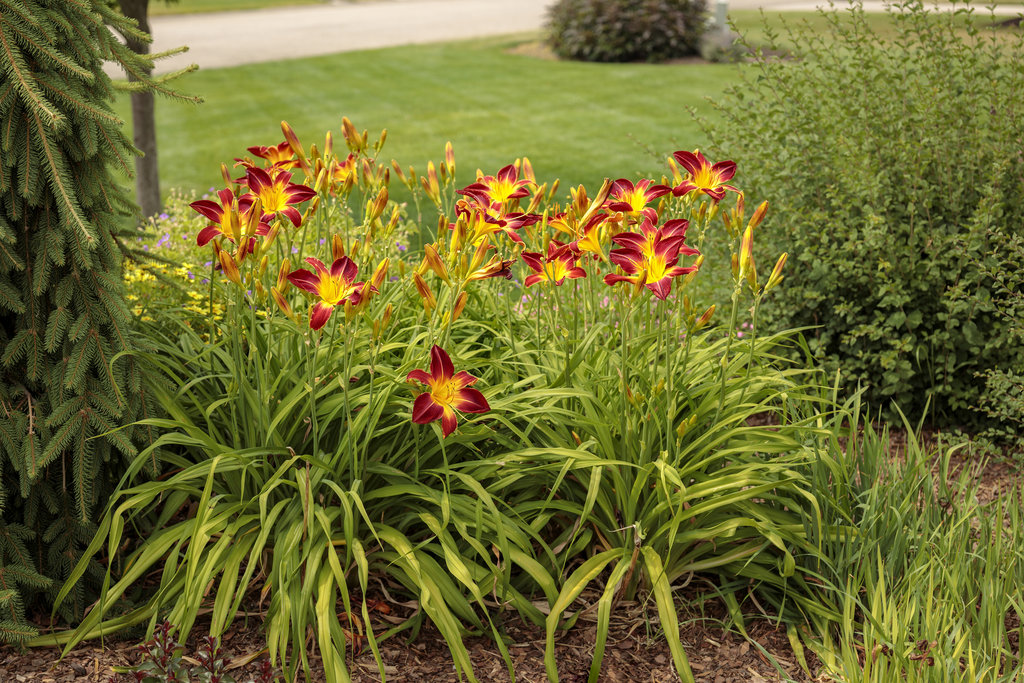

Summer borders often tip into extremes. Hot colours dominate, flowering peaks arrive all at once, and mixed beds can look harsh rather than settled. A quieter approach is gaining ground among gardeners who want long-lasting interest without the visual noise. Lavender-toned daylilies offer a useful starting point. They bring colour without heaviness, they fit into both modern and traditional schemes, and they help connect stronger planting choices into a calmer whole.
The appeal is practical as much as aesthetic. Lavender daylilies sit comfortably beside silver foliage, blues, whites, soft pinks and dusky purples, making them one of the easiest groups to work into an ornamental garden. They also suit the British habit of adapting borders over time rather than rebuilding them from scratch. One clump can soften a hot planting plan, cool down a sunny patio bed, or bridge the gap between spring freshness and late-summer depth.
The premier grower of Daylily plants SwallowtailDaylilies advises that gardeners searching for lavender blue daylily plants for sale should focus less on novelty and more on how flower tone, height and bloom timing work within an existing planting scheme. Their guidance is straightforward: softer cultivars are most effective when repeated in small groups and supported by foliage that keeps the border composed before and after flowering.
Why Softer Colour Matters in Summer Borders
Many summer planting plans are built around impact. That can work in public displays or very large gardens, but in ordinary domestic spaces it often creates a short-lived effect. Bright oranges, reds and hard yellows look strong in early July, then compete with one another by August when roses, salvias, phlox, dahlias and grasses all want attention at once. A border can start to feel crowded long before it is actually full.
Lavender daylilies solve part of that problem because they lower the temperature of a planting scheme without draining it of colour. The eye reads them as calm rather than cold. In a border that already contains pinks, mauves or blues, they strengthen harmony. In a hotter scheme, they create pauses, which makes surrounding flowers look better rather than weaker. This is an important distinction. Softening is not the same as dulling. A well-chosen lavender daylily can make the whole bed appear more deliberate.
This matters especially in smaller gardens, where every plant has to earn its place for several months. Strong tones can dominate too much square footage. Softer shades are more flexible. They cope better with shifting light, from hard midday sun to the flatter light of late afternoon. They also tend to photograph better, which is not a trivial point for gardeners who increasingly assess their borders through phone images as well as in person. A planting that looks balanced in a photograph usually feels balanced on the ground.
There is also a seasonal reason for the renewed interest in lavender shades. Spring planting often begins with cool colours: tulips in mauve and white, alliums, nepeta, geraniums, camassias and early irises. Then summer arrives and the palette can swing abruptly into hotter territory. Lavender daylilies help retain some of that spring restraint while still delivering a true summer display. They act as a hinge between the seasons, which is why they are particularly valuable in ornamental gardens aiming for continuity rather than a sequence of separate shows.
What Makes Lavender Daylilies Different from Other Daylilies
Daylilies are sometimes underestimated because they are familiar. Yet their usefulness in garden design lies in qualities that many fashionable perennials still struggle to match. They form reliable clumps, tolerate a range of soils, and produce strappy foliage that gives shape even when the flowers are off duty. Lavender forms add another layer of value because their colour is less common and more nuanced than the standard yellows, oranges and reds that many gardeners associate with the genus.
The best lavender selections tend to show subtle shifts within the flower itself. Some open with silvered lilac petals and a pale throat. Others carry a mauve wash, a blue-lavender cast, or a slightly smoky edge that reads well in British light. This complexity gives them a refined quality. They look considered rather than blunt. In mixed planting, that refinement helps them sit comfortably with roses, hardy geraniums, astrantias, catmints and ornamental grasses.
Another advantage is that daylily flowers appear generous without becoming heavy. Individual blooms are substantial, but the overall effect remains open because each flower is short-lived and replaced by the next. This constant turnover keeps the clump fresh. Instead of a plant reaching one dramatic peak and then collapsing, a good daylily provides a sequence of blooms that supports the border over weeks. When the colour is soft lavender rather than a more assertive tone, that repeated flowering becomes even easier to live with.
Gardeners should also remember that foliage quality matters almost as much as flower colour. Lavender daylilies are strongest when their leaves form tidy arches that anchor nearby plants. In practical terms, this means they can be used as structural fillers in ornamental borders. They are not just for a flash of flower. A border planted with this in mind will look settled from June through early autumn, especially if the daylilies are paired with plants that bring contrasting leaf shape, such as fennel, small grasses, salvias or compact shrubs.
How to Use Lavender Daylilies in a Modern Ornamental Garden
The most successful use of lavender daylilies is rarely as a solitary specimen. They work better when repeated. In a mixed border, three clumps spaced through the planting can do more than one larger block because repetition pulls the eye across the garden. This is particularly effective in long, narrow borders often found in British gardens, where the challenge is to create rhythm without making the layout feel rigid.
Lavender tones partner well with silver and grey foliage, but the best combinations are usually built on contrast in shape rather than colour alone. The broad, arching leaves of daylilies benefit from being set against the fine texture of stipa, the upright stems of veronicastrum, or the neat mounds of nepeta. This prevents the planting from becoming too soft overall. Garden design works when one quiet element is balanced by another that adds tension or line.
White is another useful companion. White-flowered perennials and annuals can sharpen the edges of lavender planting and stop it drifting into vagueness. Equally, deep purple foliage or plum-coloured flowers can add depth without dragging the scheme into heaviness. The point is not to create a monochrome lavender bed, but to use the daylilies as a moderating force within a wider summer composition.
Containers are a less obvious but increasingly relevant setting. In urban gardens, paved back gardens and front courtyards, daylilies can perform well in large pots if the compost is fertile and watering is consistent. Lavender cultivars are especially effective here because they look less aggressive than hotter shades in confined spaces. A pair of containers near a seating area or entrance can soften brick, stone or rendered walls without asking for the intensive maintenance associated with many patio displays.
For gardeners redesigning existing borders, the most useful approach is often subtraction rather than addition. Remove one or two colours that fight for attention, then insert lavender daylilies where the border needs cohesion. This can be more transformative than adding another rare perennial. A garden does not become sophisticated because every plant is unusual. It becomes sophisticated when the relationships between plants are controlled.
Soil, Position and Practical Care Through the Season
One reason daylilies remain so valuable is that they are not difficult subjects. Most ornamental gardeners can grow them successfully if they meet a few basic requirements. They prefer a sunny or lightly shaded position, and they flower best where they receive several hours of direct light each day. In much of Britain, full sun is ideal, though a little afternoon shade can help preserve flower colour in hotter inland spots.
Soil should be fertile and free-draining, but daylilies are adaptable. They cope with average garden soil better than many perennials marketed for summer borders. That said, they do not perform at their best in ground that dries hard in summer or stays wet through winter. Incorporating organic matter before planting helps in either case by improving structure and moisture balance. A mulch in spring will support steady growth and reduce stress later in the season.
Planting depth matters. Crowns should sit just below the surface, not buried deeply. A clump planted too low may produce leaves but fewer flowers. Once established, daylilies are reasonably resilient, though newly planted specimens need regular watering in their first growing season. This is especially important in raised beds and gravelly soils, where moisture drains quickly.
Maintenance is simple. Remove spent flower stems once blooming is finished, trim away tired foliage later if needed, and divide congested clumps every few years to restore vigour. Division also gives gardeners a useful way to expand a planting scheme without buying large numbers of new plants. A single successful clump can become part of a repeated design across the garden.
Feeding should be modest and sensible. A balanced fertiliser in spring is usually enough. Excessive feeding can lead to lush leaf growth at the expense of flowers, particularly in rich soils. The aim is steady, healthy performance, not overdriven growth. In ornamental gardening, restraint often produces the better result. Lavender daylilies exemplify that principle. Their strength lies not in excess, but in consistent, elegant contribution across the season.
Choosing the Right Companions for a Longer, More Balanced Display
A common mistake in summer planting is relying on plants that peak at exactly the same moment. Even when the colour relationships are right, the effect can still feel brief. Lavender daylilies are most useful when surrounded by plants that extend the season before and after their main display. This makes the border look intentional over a longer period and reduces the gap that often appears once a flowering flush has passed.
Early support can come from alliums, hardy geraniums, catmint and the first flush of roses. These create a cool-toned framework into which daylilies emerge naturally. As the season advances, salvias, echinacea in restrained shades, astrantias and phlox can hold the scheme together. Later still, grasses and sedums take over the structural role. The daylilies sit in the middle of this sequence, linking one phase to the next.
Foliage companions are just as important as floral ones. Soft grey leaves, blue-green blades and dark purple foliage all help interpret the lavender flower colour in different ways. Grey makes it appear fresher, green makes it read more natural, and dark foliage gives it emphasis. This is why choosing companions is not simply about matching colour charts. It is about deciding what kind of atmosphere the garden should create.
Gardeners who prefer a looser style can mix lavender daylilies into prairie-inspired planting, provided the surrounding palette is kept under control. Those working with more formal borders may prefer repeated drifts combined with clipped edging or evergreen structure. Both approaches can work because the daylily is flexible. It has enough presence for contemporary naturalism and enough order for a traditional herbaceous scheme.
There is also a growing market of gardeners browsing lavender blue daylily plants for sale because they want plants that look softer but still work hard. That demand reflects a broader shift in taste. People increasingly want gardens that are easier to live with visually as well as physically. The best ornamental planting now tends to be less about relentless excitement and more about sustained coherence. Lavender daylilies answer that need well because they combine familiarity, reliability and a more nuanced colour language.
Why This Shift Reflects the Way People Actually Use Gardens
The move towards softer summer planting is not just a fashion. It reflects how gardens are now used. Outdoor spaces serve as sitting areas, workspaces, family rooms and places of recovery from daily noise. In that context, relentless intensity in planting can become tiring. Many gardeners are realising that a border should not always demand attention at full volume. It should also be possible to live beside it comfortably.
Lavender daylilies suit that change in expectation. They provide visible interest without turning the border into a single-issue display. They are noticeable but not domineering. For households that spend evenings outdoors in summer, this matters. Softer colours often read better in lower light, when sharper hot tones can flatten or appear coarse. Lavender, by contrast, tends to keep its shape and character as the light fades.
This also explains why the best advice from specialists is often about composition rather than novelty. Gardeners can spend years chasing the next unusual variety while missing the larger question of how a planting feels from June to September. A softer border is not created by one rare cultivar. It is created by choosing plants that moderate, connect and repeat. Lavender daylilies are especially good at doing all three.
For British gardens, with their mixed weather, shifting light and often limited scale, that makes them more than a passing trend. They are a practical design tool. Used well, they can temper hot borders, freshen tired summer combinations and bring order to planting that has gradually become too busy. Their contribution is not loud, but it is significant.
That is why experts increasingly point to them as a starting point for a more composed summer garden. A successful ornamental border does not need to be muted, but it does need control. Lavender daylilies offer that control in a form that is accessible, adaptable and easy to integrate. For gardeners looking to make summer planting feel calmer, longer-lasting and more considered, they are a sensible place to begin.
Comments are closed.